
 English
 Türkçe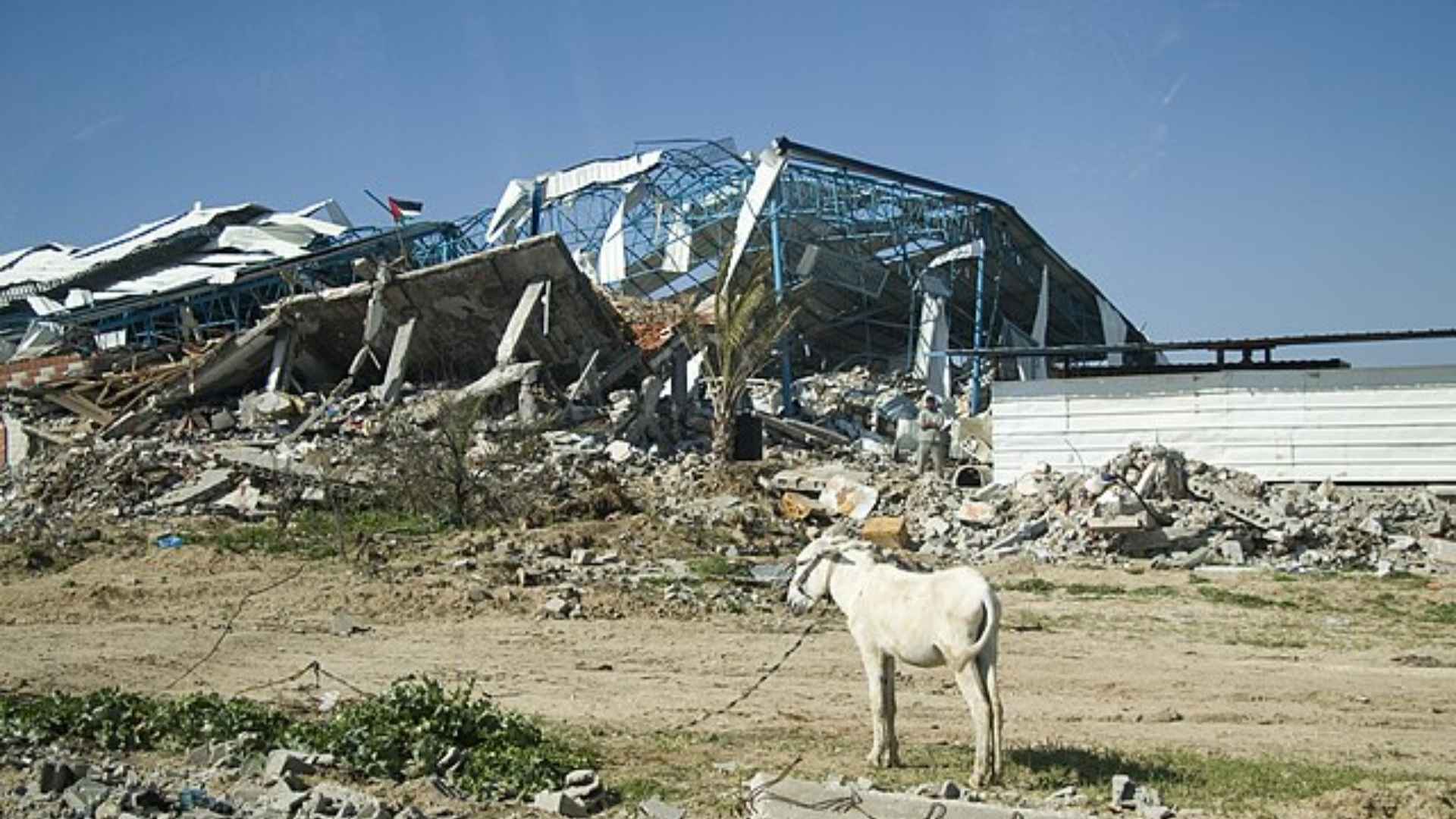
Agroterrorism: Historical and Current Cases of Agricultural War Crimes
In an upside-down world that we live in these days, one needs to start taking a good look at how our livelihoods have been affected by all the global conflicts, unknown projects and chemicals, based on documented cases of environmental warfare and deliberate agricultural sabotage throughout history. The term “chemtrails” is now often associated with a “disproven conspiracy theory” claiming routine, covert chemical spraying. But the reader should decide for themselves, and make research about their surroundings. When history truly keeps repeating itself, after all, the term “conspiracy theory” tends to prove itself wrong, 95% of the time.
The Ancient Blueprint: Emperors Salting Lands
While the salting of Carthage is the most famous—and probably legendary—example, the deliberate destruction of land and agriculture as a means of war, oppression, or punishment is deeply rooted in ancient consciousness, appearing in mythology, early history, and literature.
The Scorched Earth in Homer’s Iliad (c. 8th Century BC, depicting events of c. 12th Century BC)
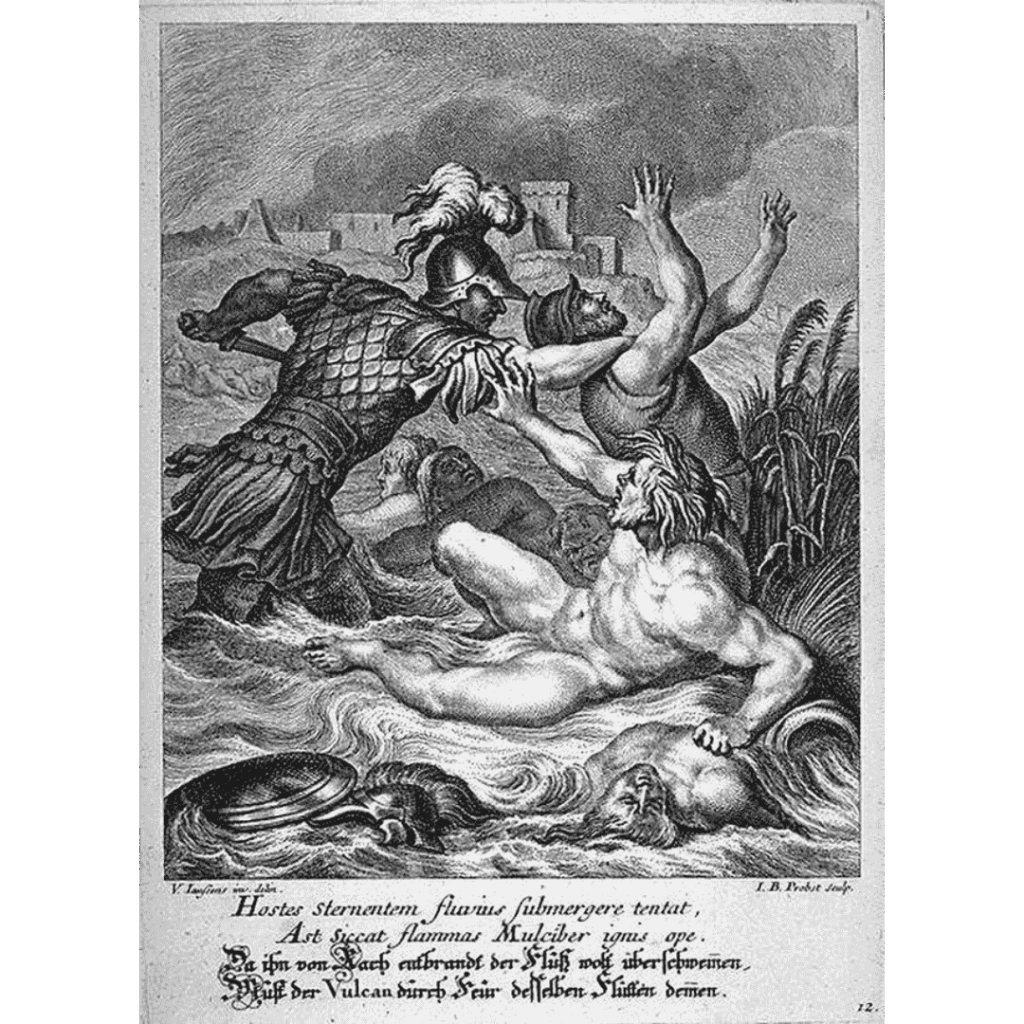
While not a chemical attack, the concept of rendering land useless is thematic. In the epic, Achilles prays for the total destruction of the Greeks and Trojans alike, and his rampage is described in agricultural terms: he is like a farmer burning a field, or a “winnower” of men. More directly, the Scamander River battle sees the river itself choked with corpses and blood, a poetic image of nature defiled by war. The underlying tactic – destroying the economic base – is implicit in the raids on “cattle and rich farmland” that were the cause of the war.
The Story of Cadmus and the Dragon’s Teeth (Greek Myth)
After Cadmus slays the dragon sacred to Ares, he sows its teeth upon the advice of Athena. Armed men (the Spartoi) spring from the soil, who then turn on each other. This is a potent metaphor for the poisoning of the land with conflict and violence. The act of sowing the teeth is not agricultural but militaristic, transforming fertile earth into a source of death, making the land itself an enemy.

The Assyrian Empire (c. 1300-600 BC)
Assyrian warfare was infamous for its calculated brutality, which included systematic agricultural devastation. Royal annals boast of cutting down orchards (date palms and fruit trees), burning grain stores, sowing salt on conquered fields, and blocking water sources.
This was not mere collateral damage; it was state terror policy. The goal was to break the will of future rebels, depopulate regions, and force mass migrations. It was ecological warfare designed to create a “desert” around the Assyrian heartland. The practice is well-documented in the annals of kings like Ashurnasirpal II and Sennacherib.
The Romans and the Veientines (396 BC)
During the decade-long siege of Veii, the Romans are described by Livy as not just blockading the city but also devastating the surrounding farmland. They cut down orchards and vines and trampled crops year after year.
This was a war of attrition aimed at starving the city into submission by destroying its agricultural base and severing its connection to the land. It set a Roman precedent for total war against a rival’s sustenance.
Romans and Carthaginians (146 BC)

After the Third Punic War in 146 BC, the Roman general Scipio Aemilianus is said to have ordered the fields of Carthage to be plowed and sown with salt. While historians debate the scale (salt was a valuable commodity), the symbolism is clear: a deliberate act to render fertile land barren for generations, destroying the enemy’s livelihood and demoralizing them. This set a brutal precedent for targeting the land itself.
The Theban “Sacred Band” and Orchomenus (c. 364 BC)
According to the ancient historian Diodorus Siculus, the Thebans, after defeating their rival city Orchomenus, plowed over the city and sowed it with salt.
If accurate, this would be a direct, documented precedent for the salting ritual a full 200+ years before Carthage. It suggests the act was a known, if rare, symbolic curse – meant to dedicate the land back to the gods (salt being a purifying agent in some rituals) and declare it permanently barren and uninhabitable.
The “chemicals” were elemental and brutal:
Salt: A symbol of sterility and a practical way to inhibit plant growth in high concentrations.
Fire: For burning crops, orchards, and granaries.
The Axe and Plow: For deforestation and the literal tearing up of roots and irrigation systems.
Water Manipulation: Diverting or poisoning wells and springs (sometimes with corpses or bitter herbs).
Modern Historical Cases: From Herbicides to Oil Fires
The U.S. Herbicidal Warfare Program in Vietnam (1961-1971)
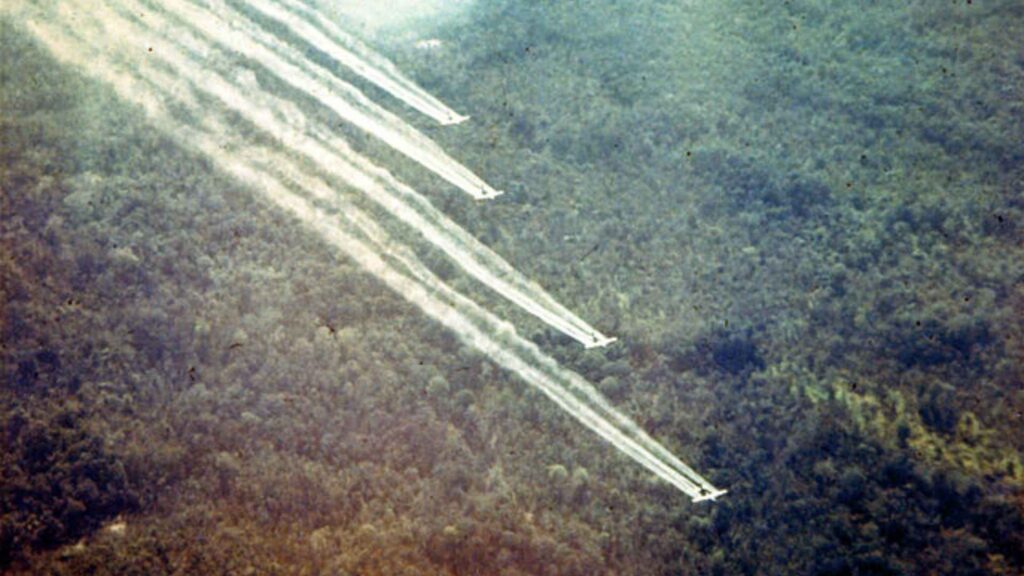
Operation Ranch Hand involved the widespread aerial spraying of herbicides, most notably Agent Orange (a 50:50 mix of 2,4-D and 2,4,5-T contaminated with TCDD dioxin), over Vietnamese jungles and farmland.The goal was deforestation and crop destruction. An estimated 4.8 million people were exposed, leading to severe long-term health effects (cancers, birth defects) and ecological damage that persists in soil and sediment.
The Use of Crop-Destroying Chemicals in Colombia
As part of Plan Colombia, U.S. and Colombian forces conducted aerial fumigation campaigns, using herbicides like glyphosate, to eradicate coca crops.
Glyphosate is a broad-spectrum systemic herbicide, the active ingredient in products like Roundup. It works by inhibiting a plant enzyme essential for growth.
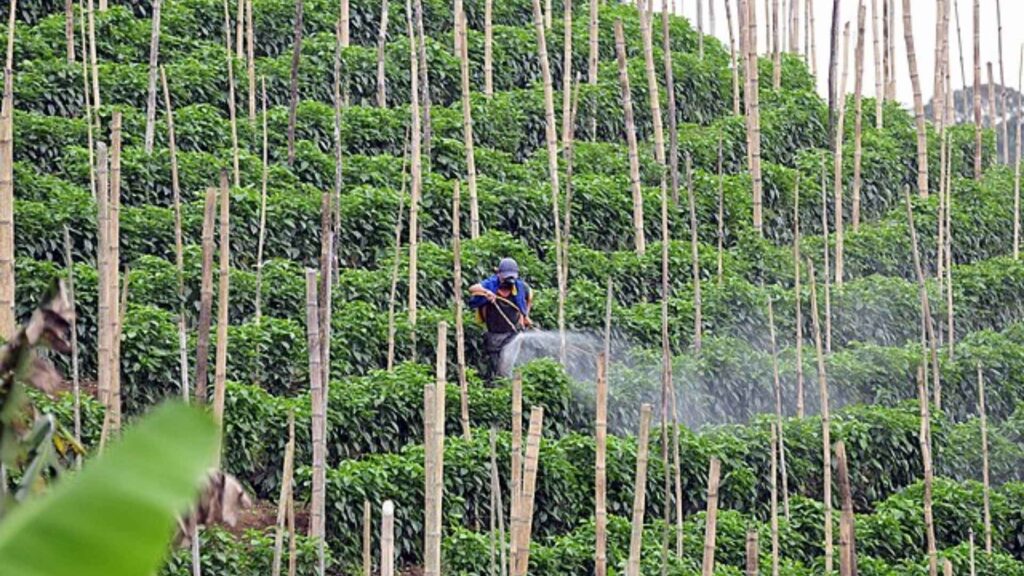
The spray drift affected vast areas of legal farmland, destroying food crops, polluting water sources, and allegedly causing health problems among rural communities. The program was controversial and scaled back due to these impacts and diplomatic pressure from Ecuador and others.
Palestine and Lebanon
The current conflicts in Gaza and Lebanon have brought allegations of deliberate environmental and agricultural sabotage to the forefront, supported by international agencies and satellite imagery.
The intense bombardment has led to widespread soil and water contamination from heavy metals (from munitions), building debris, and waste. The UN has reported that 35% of Gaza’s agricultural land has been destroyed or severely degraded. Reports from organizations like Human Rights Watch and The New Yorker cite farmers and experts who describe the destruction of ancient olive groves and farmland as not merely collateral damage, but a systematic dismantling of Gazan food systems and cultural heritage. Readers should put an additional 50% on top of 35% to really understand the true devastation.
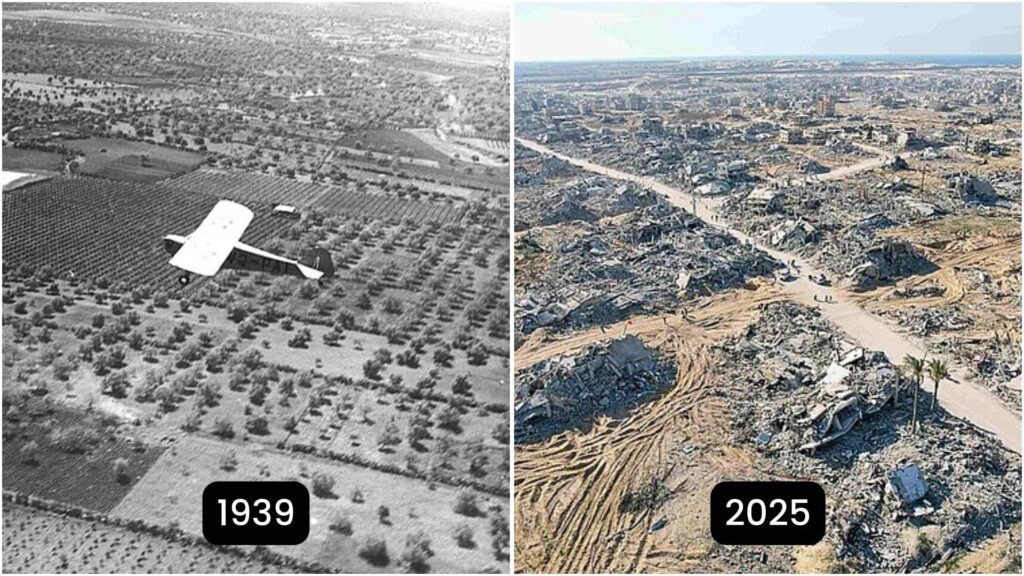
Contaminants include explosive residues, white phosphorus (documented use reported by HRW and Amnesty International, causing severe burns and soil contamination), and leachate from rubble.
Cross-border hostilities in Southern Lebanon have included theburning of thousands of olive and fruit trees, often by reported Israeli shelling and alleged use of white phosphorus shells, leading to fires.
The Lebanese Ministry of Agriculture has reported the destruction of over 900,000 trees. This targets a cornerstone of the rural economy and a deep cultural symbol.
Reports and news indicate that Israel is still flying over Lebanon and spraying agricultural areas with glyphosate.
https://telegrafi.com/en/Israel-is-accused-of-dumping-carcinogenic-chemicals-on-Lebanese-soil
Suspicious Wild Fire Incidents Throughout Patagonia, Argentina and Chile
Home to millennia-old alerce (Patagonian cypress) trees, some over 2,600 years old, fires threatened this UNESCO World Heritage site. While firefighters managed to protect the oldest stands, thousands of hectares of native forest were consumed, with long-term regeneration uncertain in the altered climate.
Intense fires, fueled by invasive plant species like rosa mosqueta (rosehip) and strong westerly winds, raged out of control for weeks. These fires not only destroyed biodiversity but also blanketed towns like El Bolsón and San Carlos de Bariloche in toxic smoke for extended periods, creating a severe public health crisis.
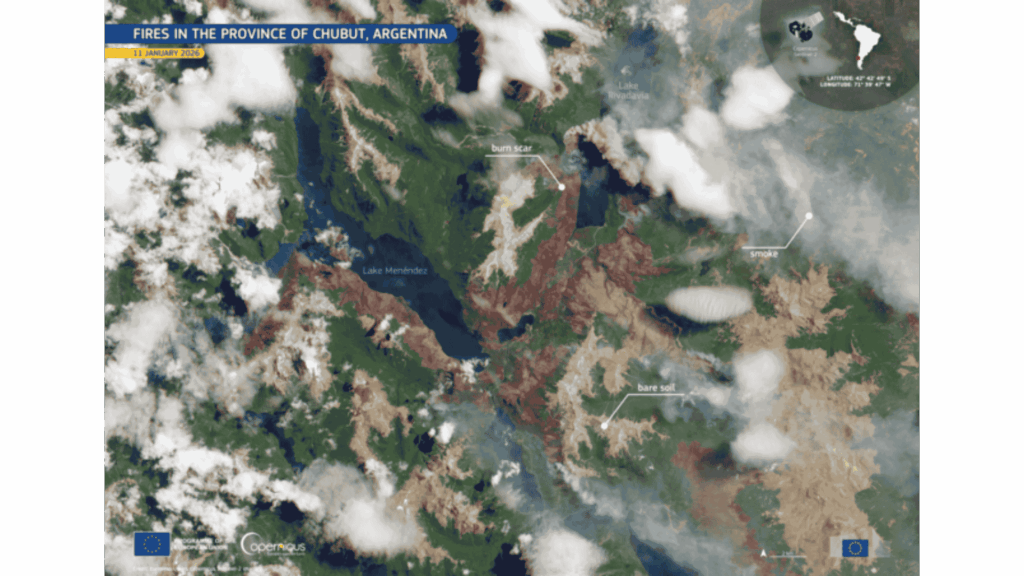
When these water-logged lands dry out and burn, they release centuries of stored carbon back into the atmosphere in a devastating feedback loop, while being incredibly difficult to extinguish.
The primary ignition sources are overwhelmingly human-related, ranging from “negligent tourists” and careless landowners to, in some Argentine cases, suspected intentional fires for speculative land clearing.
Suspicious Forest Fires Occurring in Our Country
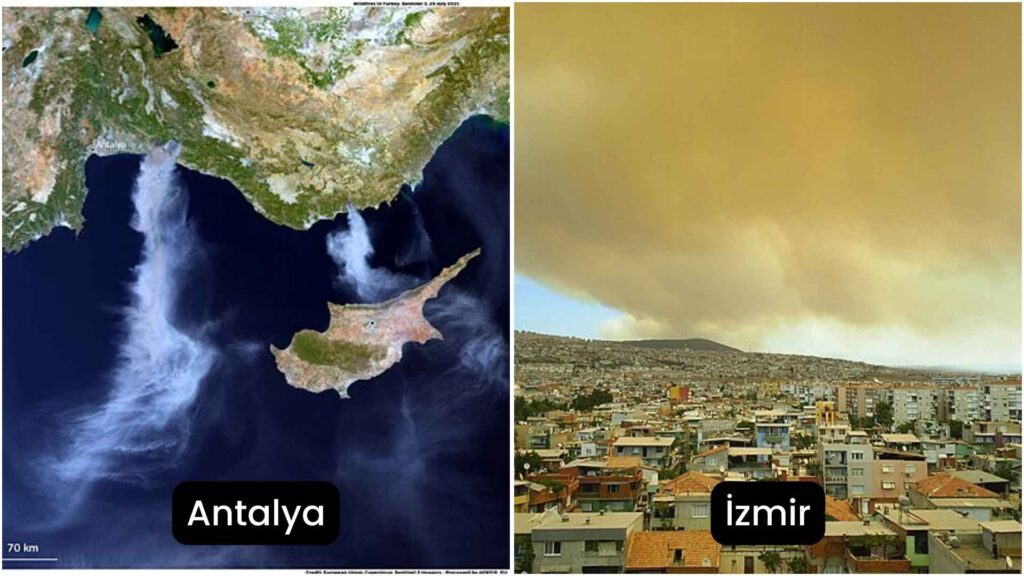
After all the uninvestigated fire incidents that have occurred in our country over the last 10 years, it’s possible to see certain patterns by tracking what happened in those areas later on.
Çanakkale, İzmir, Balıkesir, Muğla, Hatay, Antalya, Mersin, Osmaniye, Adana.
This is a picture that requires careful examination of each region individually, considering climate conditions, underground resources, and potential mining and tourism areas.
How Are Such Acts Ignored or Justified?
Despite often falling under the legal definition of a war crime (specifically, the destruction of objects indispensable to civilian survival, per Article 54 of the Geneva Conventions), these acts can be obscured or rationalized.
Security Framing: Actions are justified as necessary to deny cover or resources to an adversary (e.g., jungle defoliation to expose troops, crop destruction to curb insurgent financing).
Collateral Damage Narrative: The destruction is framed as an unavoidable, if regrettable, byproduct of legitimate military targeting, rather than an objective in itself.
Lack of Immediate Visibility: Unlike bombed buildings, degraded soil and long-term chemical contamination are slow-moving disasters. The impacts unfold over years, allowing perpetrators to avoid direct accountability.
Geopolitical Impunity: Powerful state actors often face no meaningful legal consequences in international courts due to political vetoes or non-participation in relevant treaties.
Skepticism and Disinformation: Claims of deliberate environmental warfare are sometimes dismissed as hyperbolic or propaganda, muddying the waters of public discourse and accountability.
From salted earth to scorched orchards, the attack on an enemy’s environment represents one of the most profound and cruel forms of warfare. It is a war against the future, targeting the land’s ability to sustain life long after hostilities cease. The historical and current record shows that agroterrorism and environmental sabotage are real, documented tactics. Bringing clear legal and moral scrutiny to these acts is essential. Recognizing them not as side effects but as deliberate strategies is the first step toward demanding accountability and upholding the principles that seek to protect civilian life and our shared planet, even in times of war.

You may also like