
 English
 Türkçe
Ultimate Guide to Propagation through Cuttings – 2
Previously we discussed the basic principles and methods of plant propagation by cutting. In addition, we explained how some popular houseplants such as the Swiss Cheese Plant, Snake Plant, Giant White Bird of Paradise, Prayer Plant, and Heartleaf Philodendron can be easily propagated by cutting.
In this post, we continue our topic with other decorative popular plants such as Zamiokulkas, Amazonian Elephant Ear, Rubber Plant, Anthurium Flower, Arrowhead Philodendron, and Chinese Money Plant.
Zamia – Zamioculcas zamiifolia
Propagating Zamiokulkas can be done through leaf cuttings, stem cuttings, or division.
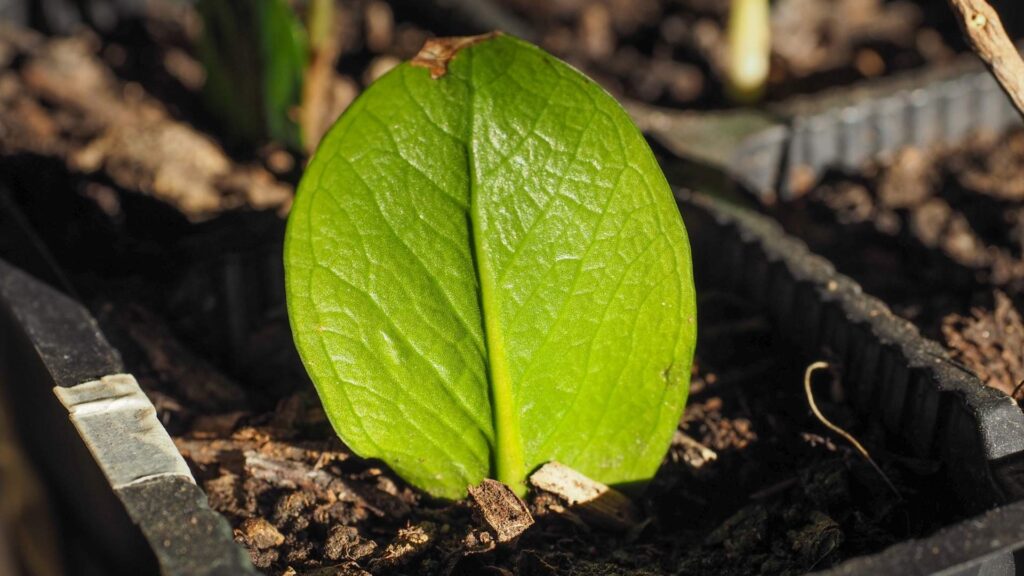
Propagating Through Leaf Cuttings
Cut a healthy leaf near its base. Let the cut dry for 1–2 days. Plant the base of the leaf in well-draining soil. Water lightly and place in bright, indirect light. Wait for roots and rhizomes to form (can take months).
Propagating Through Stem Cuttings
Cut a healthy stem with multiple leaves. Let the cut dry for 1–2 days. Place in water (change weekly) or plant in soil. Keep in bright, indirect light and water sparingly. Roots develop in a few weeks.
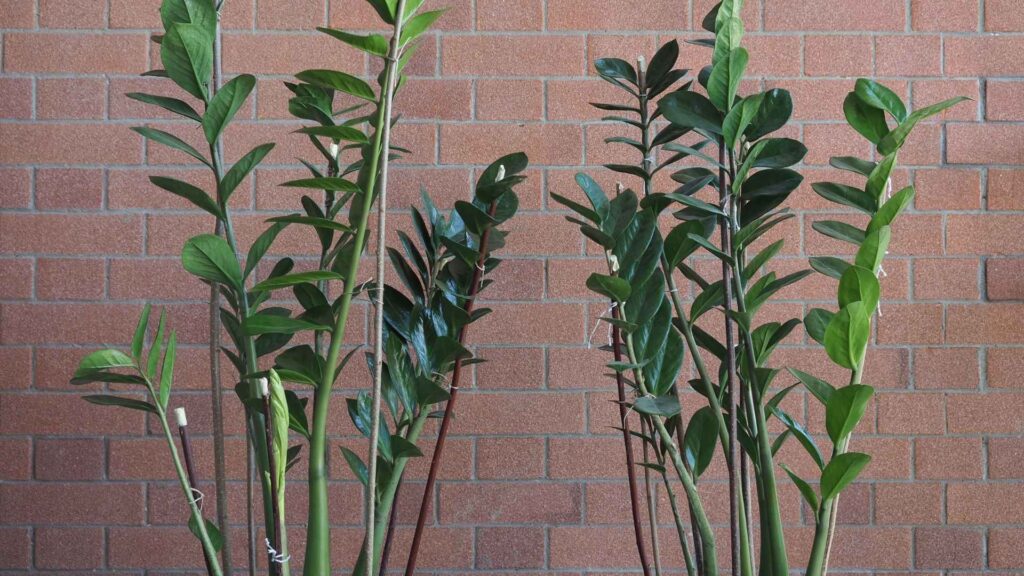
Propagating Through Division
Remove the plant from the pot. Separate the rhizomes into sections with roots and stems. Replant each section in its own pot with fresh soil. Water lightly and place in indirect light.
Amazonian Elephant Ear – Alocasia amazonic
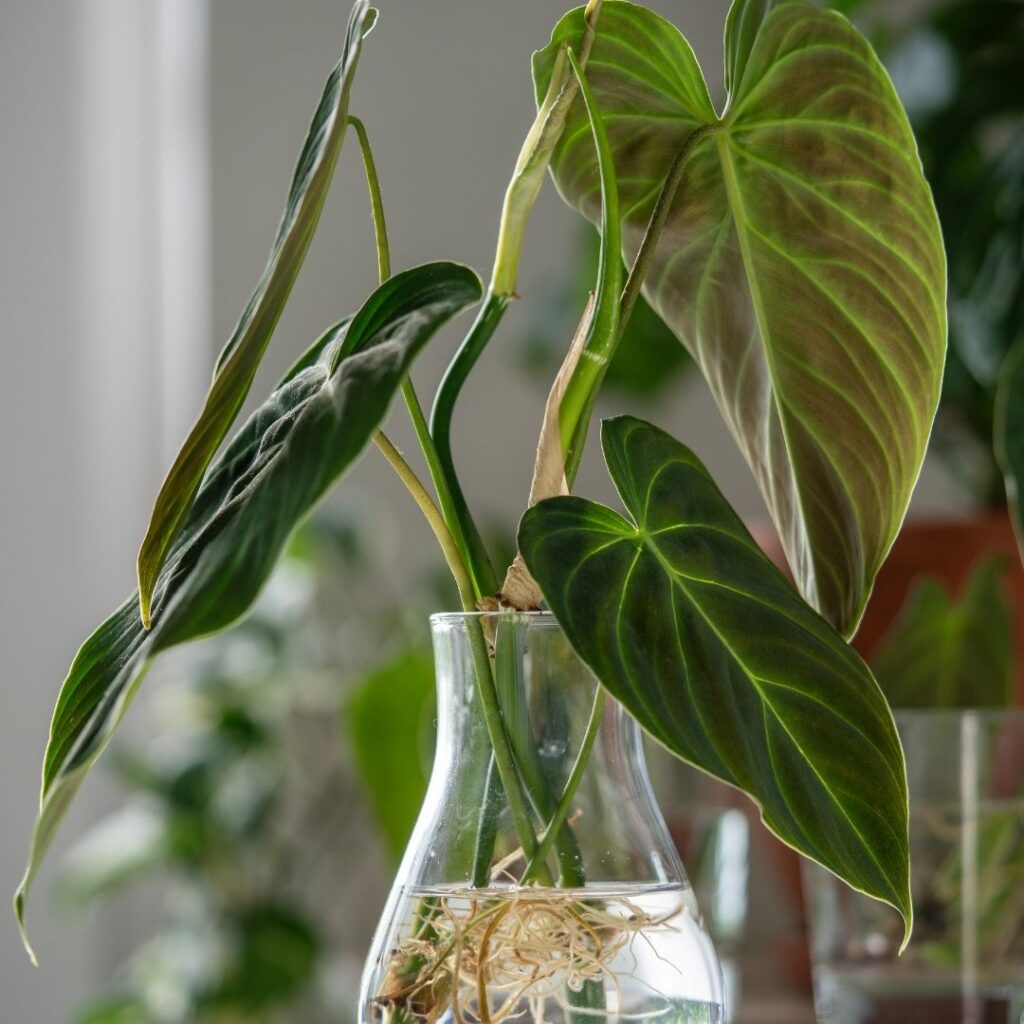
Propagating an Amazonian Elephant Ear (Alocasia amazonica) is typically done through division, as it produces offsets or “pups” that can be separated.
Wait for Pups: Look for small offsets growing near the base of the parent plant.
Remove the Parent Plant: Carefully take the plant out of its pot to expose the root system.
Separate the Pups: Gently detach the offsets from the main plant. Ensure each pup has roots and a stem. Use a clean knife if necessary, and avoid damaging the roots.
Plant the Divisions: Pot each pup in its container with well-draining, moist soil. Use a mix designed for aroids (peat-based with perlite or orchid bark).
Care for New Plants: Place in bright, indirect light. Keep the soil moist but not soggy. Maintain high humidity to reduce stress on the young plants. Propagate during the growing season (spring or summer) for best results.
Rubber Plant – Ficus elastica
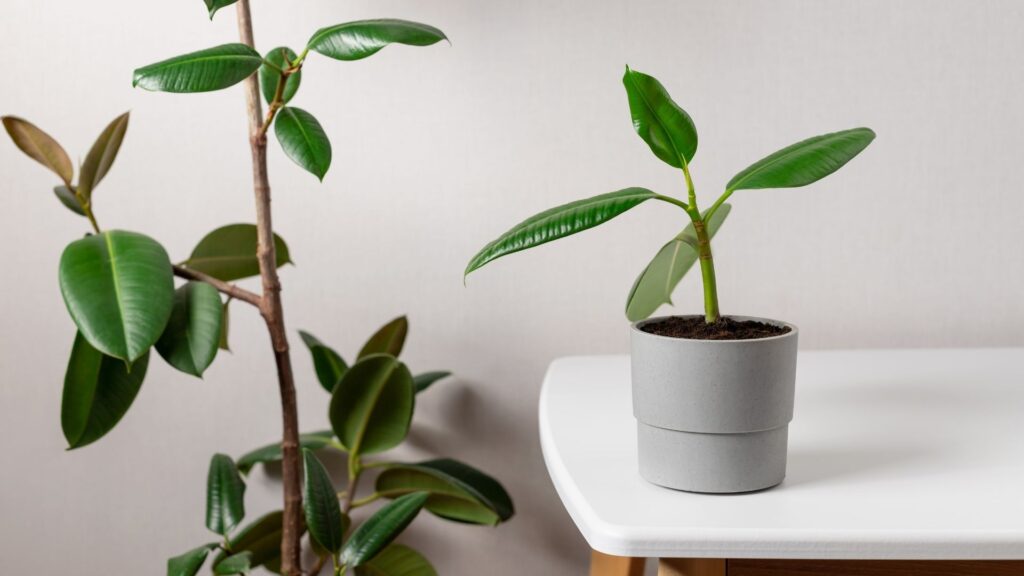
Propagating a Rubber Plant (Ficus elastica) is typically done by using stem cuttings, but you can also propagate through air layering for more mature plants.
Propagating Through Stem Cuttings
Select a healthy stem with at least one node and a few leaves. Cut the stem just below a node, ideally 4–6 inches long. Remove the lower leaves, leaving one or two at the top. Allow the cut end to dry for a few hours to seal the latex sap. Place the cutting in water, ensuring the node is submerged, change the water weekly or dip the cut end in rooting hormone (optional) and plant it in moist, well-draining soil. Roots will appear in 4–6 weeks.
Propagating Through Air Layering
Select a healthy, woody stem. Make a diagonal cut halfway through the stem and insert a toothpick to keep it open. Wrap damp sphagnum moss around the wound and cover with plastic wrap, sealing the ends. Roots will develop inside the moss in 4–8 weeks. Keep the moss moist during this time. Once roots form, cut below the moss and plant the new section in soil.
Anthurium Flower – Anthurium andraeanum
Propagating an Anthurium (commonly known as the Flamingo Flower) can be done using division or stem cuttings.
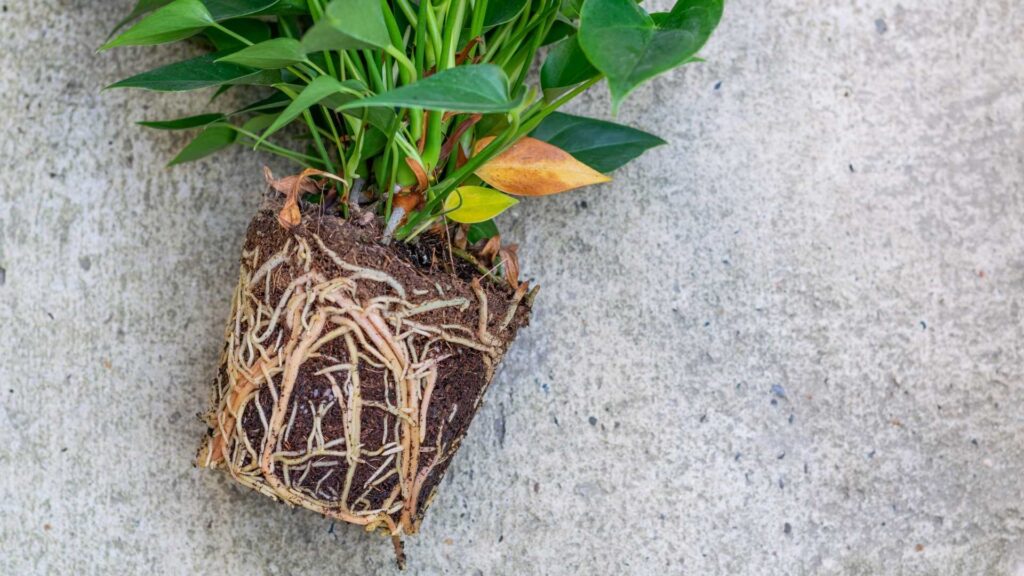
Propagating Through Division
Gently take the Anthurium out of its pot to expose its roots. Identify natural divisions or offshoots with their own roots and leaves. Carefully separate them by hand or with a clean knife. Plant each division in its own pot with well-draining soil (use a mix for orchids or aroids). Place in bright, indirect light. Water lightly, keeping the soil moist but not soggy.
Propagating Through Stem Cuttings
Choose a stem with at least one node and some aerial roots, if possible. Cut below a node, use a clean knife to make the cut. Place the cutting in water, ensuring the node is submerged. Change water weekly. Or plant the cutting in moist, well-draining soil. Roots will develop in 4–6 weeks. Transfer water-rooted cuttings to soil once roots are 2–3 inches long.
Arrowhead Philodendron – Syngonium podophyllum
Arrowhead Philodendron, also known as Syngonium podophyllum, is easy to propagate, especially through stem cuttings and division.
Propagating Through Stem Cuttings
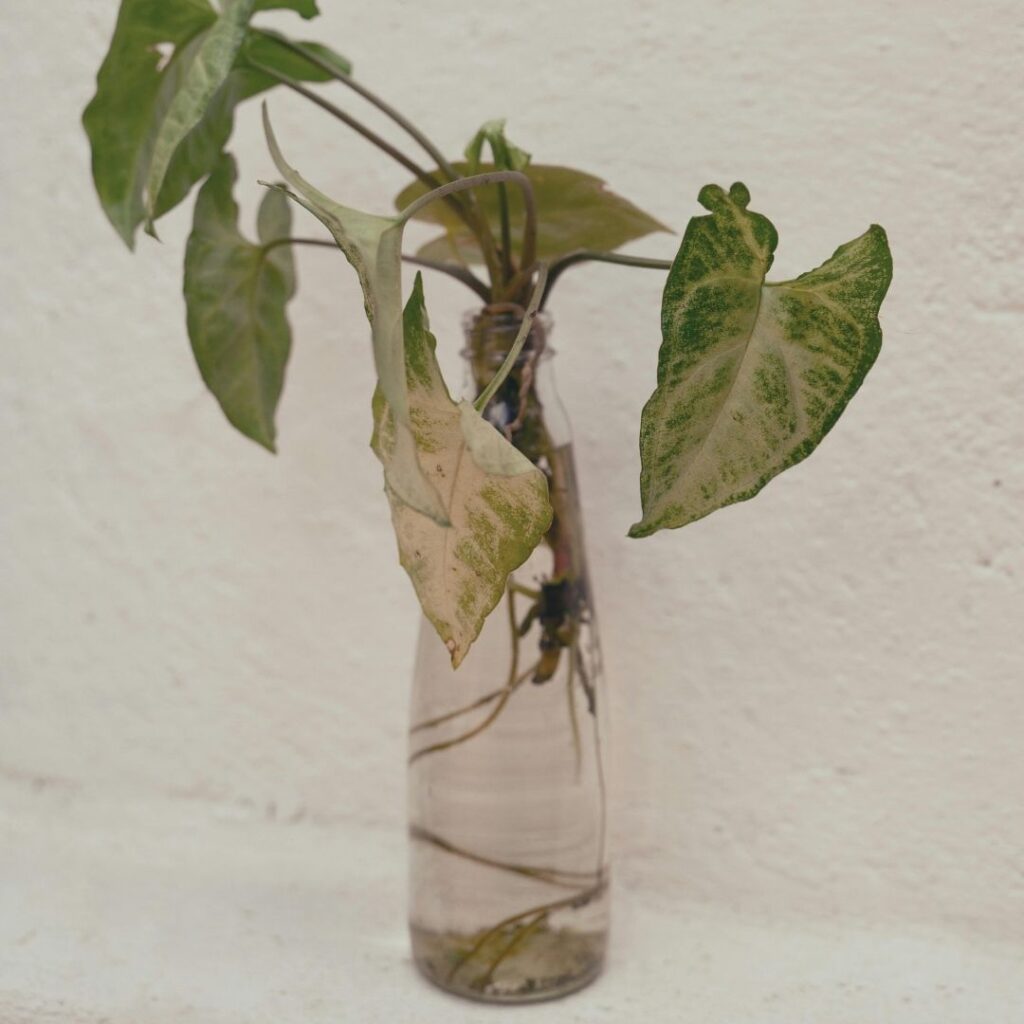
Select a stem with at least one node (the bump where roots and leaves grow) and a few leaves. Use clean, sharp scissors or a knife to cut below a node. The cutting should be 4–6 inches long. Remove any leaves near the node to prevent rotting.
Place the cutting in water, ensuring the node is submerged. Keep it in bright, indirect light and change the water every 5–7 days. Roots should appear in 1–2 weeks. Once roots are 2–3 inches long, transfer the cutting to a pot with soil.
Propagating Through Division
Gently take out the parent plant from its pot to expose the root system. Identify sections with roots and leaves and separate them using your hands or a clean knife. Place each division in its own pot with fresh soil. Water lightly and provide bright, indirect light.
Chinese Money Plant – Pilea peperomioides
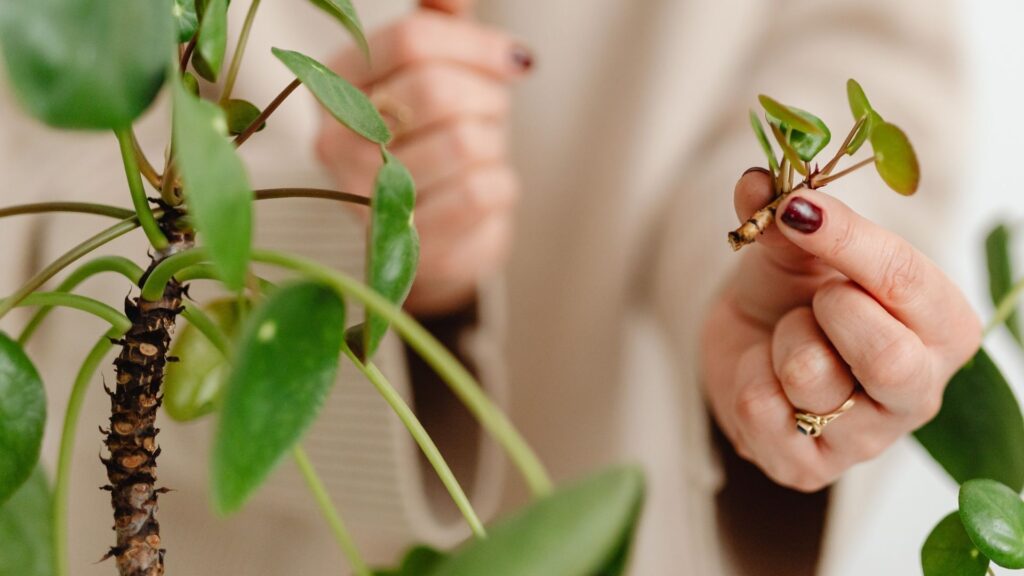
The Pancake Plant (Pilea peperomioides), also known as the Chinese Money Plant, is very easy to propagate, especially through offsets (baby plants) that grow around the base of the parent plant.
Propagation by Offsets (Pups)
Look for small baby plants growing near the base of the mother plant. Gently take the plant out of its pot to expose the roots. Carefully separate the pup from the parent plant. Ensure it has its own roots attached. Use a clean knife or scissors if necessary. Place the offset in a small pot with well-draining soil. Water lightly to settle the soil.
Place the pot in bright, indirect light. Keep the soil slightly moist but not soggy. New growth will appear in a few weeks.
Propagation by Stem Cuttings (If No Offsets Are Present)
Choose a stem with a node and a few leaves. Cut it just below the node. Place the cutting in water, ensuring the node is submerged. Change the water weekly. Roots should appear in 2–4 weeks. Or plant the cutting in moist, well-draining soil. Keep it in a humid environment (optional). Once roots are established (about 2–3 inches long if in water), transfer to a small pot with soil.

You may also like
More Than Just a Spice: The Healing Science of Rosemary

Drought-Tolerant Plants for Hot, Dry Gardens